


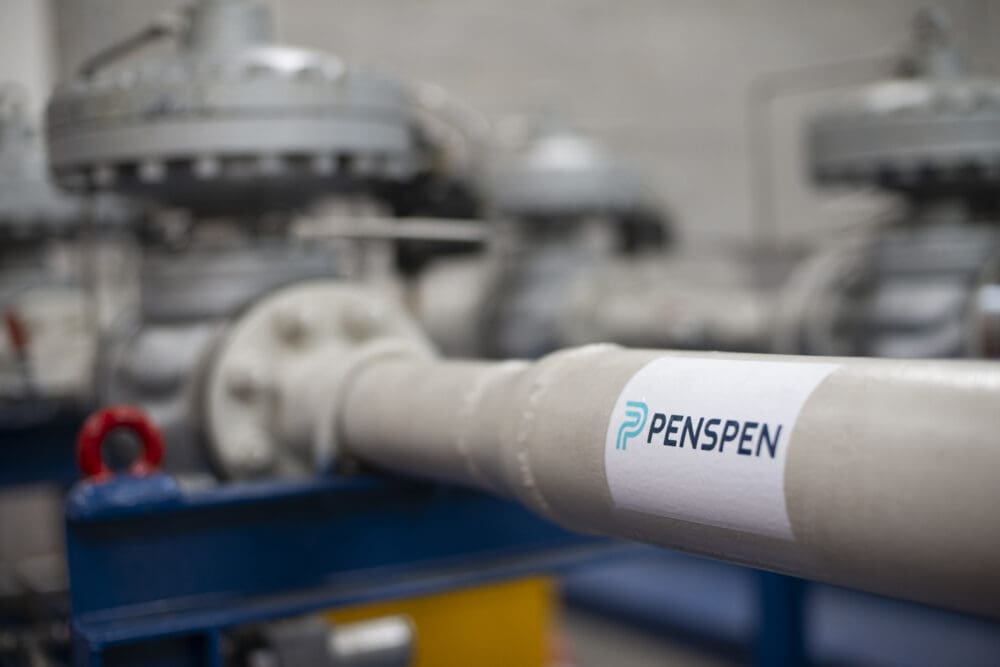

International engineering consultancy Penspen has been awarded a project by National Gas Transmission (NGT) to explore the effects of oxygen as an inhibitor for pipeline embrittlement as the operator develops a national hydrogen pipeline network.
The project, which has been funded by OFGEM’s Network Innovation Allowance (NIA), will investigate whether oxygen is an effective and practical solution for inhibiting hydrogen embrittlement. It is well established that hydrogen embrittles pipeline steel, causing undesirable changes to key mechanical properties, such as decreasing fracture toughness and ductility, whilst increasing fatigue crack growth rate.
As owner and operator of the 5,000-mile National Transmission System (NTS), National Gas are developing a 1,500-mile hydrogen transmission system, comprised of repurposed natural gas pipelines and a new hydrogen pipeline network, that will build the capability and flexibility required to transport hydrogen across Great Britain, supporting energy security and decarbonisation of hard-to-abate industrial sectors.
The project will be delivered from Penspen’s Newcastle office, supported by members of the company’s Centre of Engineering Excellence based in Aberdeen, Scotland and Abu Dhabi, United Arab Emirates. Engineers will focus on identifying and addressing critical concerns related to the deployment of oxygen inhibition to enable informed decision-making on how to progress this innovative technology further. This includes investigating alternative gas inhibitors, identifying delivery mechanisms, including the design of a dosing system for oxygen injection, and a roadmap for validation and implementation.
 Dominic Wynne, Regional Business Development Manager at Penspen, said: “With our experience supporting operators with hydrogen infrastructure projects, mechanical testing programs, and process equipment design, Penspen are uniquely placed to support National Gas with this innovative project.
“The results will play a critical role in defining an optimised operating window in both new and repurposed pipelines, supporting the transition to low-carbon energy.”
Robert Best, Innovation Engineer at National Gas, said: “Gas inhibitors have the potential to optimise the efficiency of pipeline networks containing hydrogen by enabling higher operating pressures plus larger, and more frequent, pressure variations, conferring substantial benefits to pipeline operators. However, significant challenges remain with regards to the implementation of this technology. We are pleased to partner with Penspen on this multidisciplinary project exploring the viability of such technologies for the National Transmission System.”
(Dominic Wynne, Regional Business Development Manager – Penspen)
For media inquiries, please contact:
Colene Woolcott, Director of Marketing & Communications: c.woolcott@penspen.com
- Discover more about Penspen’s extensive energy transition experience here.
More News

Penspen Asset Management Consultancy: Managing Risk and Compliance Across Asset-Heavy Portfolios
International engineering consultancy Penspen has launched an Asset Management Consultancy, supporting asset-heavy industries looking to protect reliability, improve value, meet regulatory...
Penspen Opens New Newcastle Office to Drive European Asset Integrity Growth
International engineering consultancy Penspen has opened a new office in Newcastle’s Time Central facility as it plans further growth in the European asset integrity market. The new office is home...

Penspen Strengthens Leadership Team Following Record Year
International engineering consultancy Penspen has announced two strategic appointments in its leadership team following a record sales year. Neale Carter has been promoted to the newly created role...

Penspen Delivers Record Year With $500M in Contract Awards in 2025
Chief Executive Officer, Peter O’Sullivan: “2025 stands out as one of the strongest commercial and delivery years in Penspen’s history.” Penspen has announced a record year, securing $500...