


At the 2025 International Pipeline Congress, held in Boca del Río, Veracruz, Mexico, Penspen were proud to exhibit, meeting pipeline industry leaders from across Latin America to discuss how technology, safety and sustainability will drive the future of energy in the region.
Organised by the Mexican Association of Pipelines and Hydrocarbon Transportation (AMDTH), the event focused on three strategic areas; technology transfer for safer and more efficient operations, knowledge exchange, and innovation.
Following her technical presentation at the event, Antonia Rodriguez Ramos, Integrity Engineer at Penspen, explores the key considerations when developing and implementing asset integrity management systems, particularly in relation to Mexican standards, in our latest technical insight.
Asset Integrity Management (AIM) is a key strategy to ensure safe, reliable, and efficient operation throughout the lifecycle of an asset. In addition to supporting regulatory compliance, integrity management is aimed at preventing failures and reducing risk. Through a comprehensive approach encompassing policies, procedures, and technologies, and harnessing proactive management, continuous monitoring, and strategic decision-making, effective integrity management enables operators to maximize performance and even extend the useful life of their assets, whilst protecting operations, people, and the environment.
The integrity management field is constantly evolving, but the field as we know it today began to develop in the 1990s with a focus on pipelines. Today, two internationally recognized standards stand out for pipeline integrity management: API 1160 and ASME B31.8S. In Mexico, the reference standard is NOM-009-ASEA-2017, with the first version (NOM-027-SESH) published in 2010.
Integrity management for facilities, however, is somewhat more complex than for main pipelines, due to the nature and complexity of these types of assets. This can be due to s number of operating variables, including multiple diameters, condition (surface or buried), variety of materials used in construction, and frequency of use resulting in low or intermittent flow, among others.
Currently, a reference for Facility Integrity Management is API 1188, which defines guidelines for facilities handling hazardous liquids. In all cases, the standards are based on the Plan-Do-Check-Act (PDCA) cycle and focus on risk identification and assessment (threats that may compromise safety and operation), to ensure operational reliability of assets under a continuous improvement scheme and a risk management culture.
In 2020 the Agency for Safety, Energy and Environment (ASEA) in Mexico issued the “Guide for the development of a risk-based inspection (RBI) program in hydrocarbon sector facilities”. This guide emphasizes that an effective inspection program considers when, where, and how to manage inspection resources, with the purpose of administering the mechanical integrity of facilities, focusing on economic value and acceptable performance, as well as maintaining documentary records that serve as input for scheduled inspection processes and for updating maintenance programs.
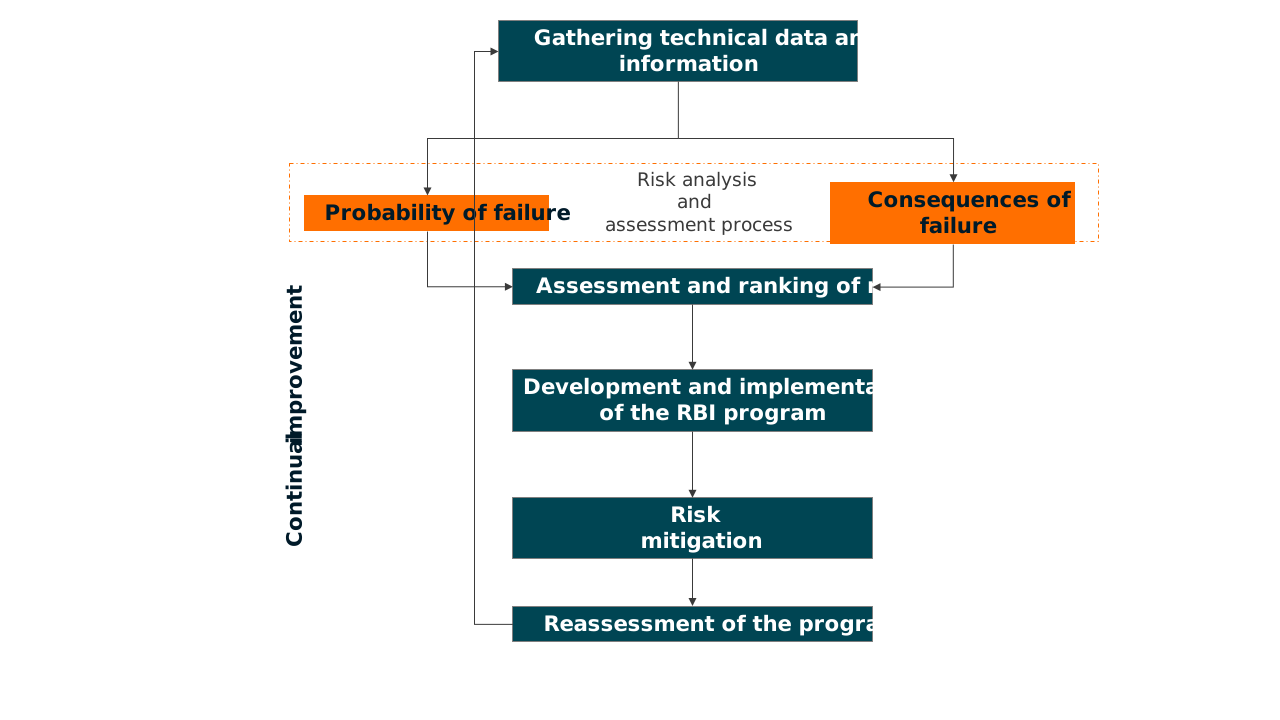
Since 2020, Penspen has successfully implemented a comprehensive service for Facility Integrity Management, which includes:
- Information gathering
- Initial Risk-Based Inspection
- Direct inspection (non-destructive testing) and indirect inspection (DCVG, CIPS)
- Integrity analysis
- Final Risk-Based Inspection.
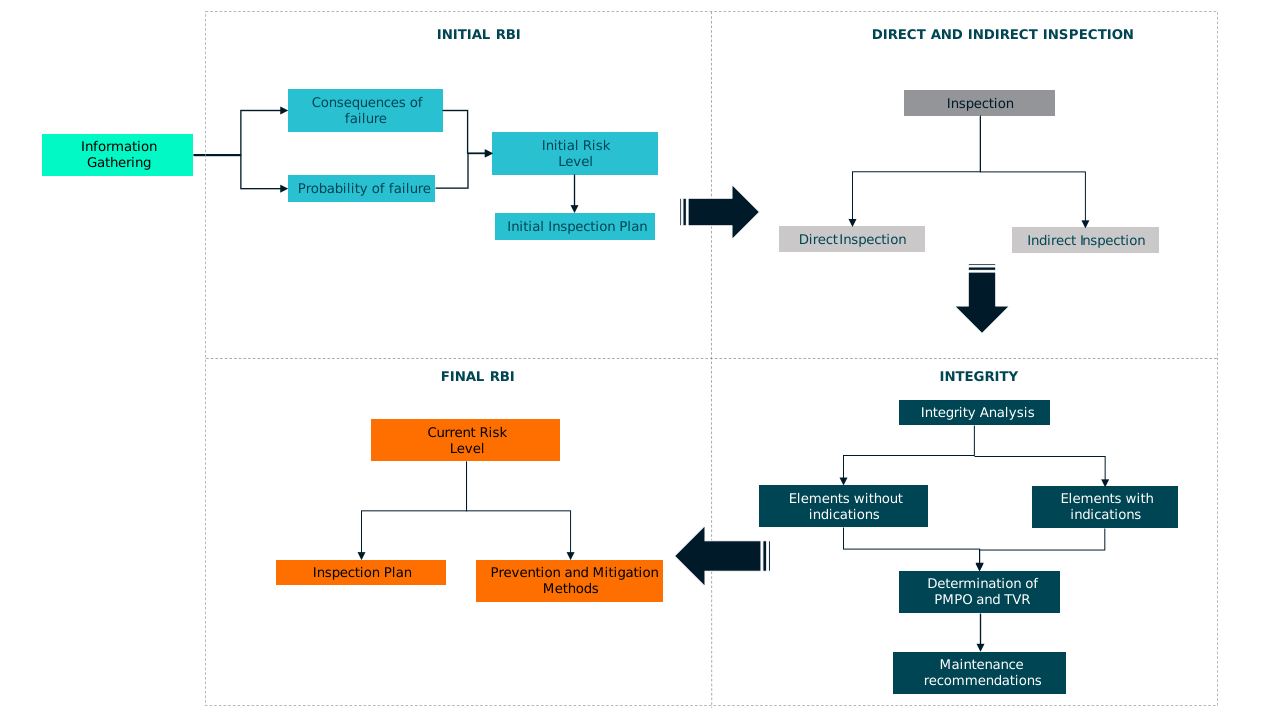
Figure 1. Penspen Comprehensive Service
The full service informs our clients of the current condition of their facilities, enabling them to make effective decisions based on the determined risk level, reducing costs associated with inspection. With technical excellence at its core, our approach demonstrates comprehensive risk management, so our clients can be sure of the integrity of their facility.
Related Insights

Curiosity, Commitment, and Corrosion: Our People – Yureis Villasmil
Passionate about personal development, integrity engineer Yureis shares how her her work contributes to the safe and sustainable delivery of energy throughout Latin America. ...

Development and Implementation of Asset Integrity Management Systems
In the case of facilities, integrity management is somewhat more complex than for pipelines, due to the nature and complexity of these types of assets, which distinguish them from a main...
Pipeline Performance vs Dust
In the latest integrity issue of World Pipelines, Penspen Asset Integrity experts explore how dust impacts the integrity, reliability, and safety of gas transmission and distribution systems, and...

A New Landscape: Our People – Nick Molnar
Nick is a Senior Pipeline Integrity Engineer at Penspen. Since joining the team in November 2024 and relocating from Canada to Abu Dhabi, he’s been an integral part of Penspen’s Centre of...