



Dust may be invisible but its impact isn’t. Understanding and managing it effectively is key to ensuring safe, efficient, and sustainable pipeline operations.
In the November integrity issue of World Pipelines, Penspen’s Gustavo Adolfo Romero Urdaneta, Ilze Lorena Priego Ahumada, and Juan Carlos Gomez Dorantes explore how dust impacts the integrity, reliability, and safety of gas transmission and distribution systems, and propose a six-stage methodology to assess and mitigate its effects.
By linking data, multidisciplinary collaboration, and proactive inspection, this structured approach enables operators to manage dust as part of their pipeline integrity management systems, improving reliability and extending asset life.
Read the full article on page 34 of the November 2025 integrity issue of World Pipelines.
Read the IssueRelated Insights

Subject Matter Expert Evaluation of Pipeline Integrity Trained, Agentic Artificial Intelligence Based Technical Advisory System
As artificial intelligence tools, particularly large language models (LLMs), continue to evolve, their potential for supporting technically complex domains such as pipeline integrity management is...

Artificial Intelligence in Pipeline Integrity: What the Evidence Actually Says
Where can AI be trusted in pipeline integrity management? In the August issue of World Pipelines, Penspen digital experts explore the evidence from Penspen’s evaluation of Aura, an AI-based...
Managing Electrical Interferences on Pipelines – A Practical and Cost-Effective Approach
The rapid expansion of AC/DC transmission networks, electrified transportation systems and pipeline infrastructure has increased the spatial overlap among these...
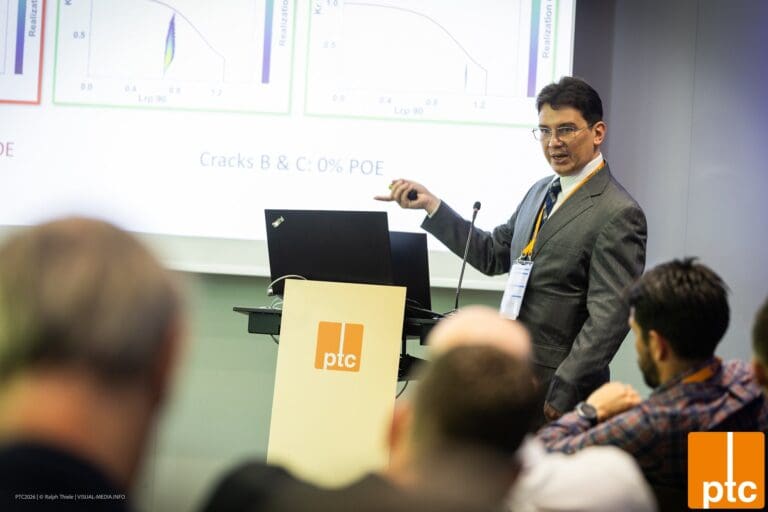
Exceedance Probability Modeling in Pipeline Integrity Using Big Data Techniques for Crack Type Anomalies
In our latest technical insight, Penspen Asset Integrity experts explore how exceedance probability modelling and big data techniques can be applied to crack-type anomalies to support risk-based...