


The Future of Pipeline Integrity
A commitment to future certainty
As we enter a new decade, pipeline engineers are poised with an eye to the future while at same time seeking to consolidate the certainties of the past. They are not alone. As an industry, we’re known to be conservative and hardly in the vanguard of technology that reaches beyond digitalisation to embrace once unforeseen innovations.
Things are about to change, since the future certainty of pipeline integrity will increasingly depend on embracing new technologies, including machine learning and AI, to reduce risk for operators worldwide.
How a Pipeline 4.0 philosophy fits with Industry 4.0
We are now in the era of Industry 4.0 and stand to benefit from the technological advances that the fourth industrial revolution represents. Live or real-time data combined with interactive computer modelling, enabled via a cloud infrastructure, present enormous opportunities for pipeline operators to predict and mitigate failure, manage risk, and comply with myriad environmental and safety regulations.
The term Industry 4.0 was coined in 2011 at the launch of the German Government’s high-tech strategy to promote the country’s technology industries. In the intervening years, the Internet of Things (IoT) and the Industrial Internet of Things (IIoT) have become common parlance. In the oil & gas industries, the proliferation of remote sensing devices has resulted in the daily collection of exponentially growing volumes of data. Data that should allow quick, automated analysis to deliver integrity assessments predicting the likelihood of failure now and in the future, and with reasonable time to act.
Most industry stakeholders are adopting digitalisation to create value for their enterprises. This probably does not go far enough in terms of Industry 4.0. At Penspen we refer to Pipeline 4.0 philosophy to denote the future application of Industry 4.0 strategies to pipeline operations.
Introducing THEIA
Our development team at Penspen is continuously working on pipeline integrity assessments to understand defects and deterioration in pipelines, and alert clients on appropriate action to reduce the risk of failure. Improved data management and formats for data transfer are key to the further development and efficiency of this activity. In a shift towards adopting a Pipeline 4.0 philosophy, we have developed THEIA, a new digital service for engineering assessment and analytics. THEIA is the result of a close collaboration between Penspen and our technology partner QiO, the world-leading Industry 4.0 software company.
We have a bigger vision for THEIA looking ahead. Right now, the focus is on asset integrity management within a Pipeline 4.0 philosophy. Using data standards to render the data we receive machine readable and machine usable, we can further apply data science to gain valuable insights on pipeline condition and remaining life. With better algorithms and methodologies, THEIA can deal with complex real-time data to offer a reliable and practical prognosis.
From T-Cards to remote sensors
Pipelines are still in operation today that were installed a hundred years ago. Back then, engineers used a T-Card, paper-based, system to manage time and materials. In the mid 1980s, Microsoft Excel spreadsheets were widely used and became the industry norm. The more recent changeover from electronic systems to digitalisation, has resulted in even faster, more detailed data analysis.
Excel continues to dominate but at the risk of human error.
Additionally, the current surge in volumes of data threatens to exceed the practical limits of spreadsheets in the very near future. As we adopt Industry 4.0, access to the automated analysis of live data will become increasingly commonplace. Intelligent tools, such as remote sensors, provide a continuous feed of real-time data, which could easily be expected to total many gigabytes a day. As engineers, we need to be able to pick out very quickly what’s important and, without a platform such as THEIA, this is something we would currently find difficult to do.
Pipelines are ageing assets. Typically, in the US 55 per cent of pipelines are more than forty years old. It’s hard to imagine early pipeline engineers having the foresight to predict the use of spreadsheets and CAD programmes. Likewise, many would not have foreseen the more recent shift from spreadsheet-based asset management to digitalisation. If we’re generating data against a pipeline that’s going to exist a century hence, we have few excuses for not future-proofing our data structures and assessment methodologies.
Changing working practices
Established practice in asset management is about to change. Currently, operators take months negotiating a framework agreement, sending data for analysis and, after the subsequent number crunching, reporting and sign-off, are expected to make decisions based on what has become old information. With THEIA, operators can expect an up-to-date analysis of the state of their pipelines. From data upload to generating the resulting reports takes a matter of minutes, with the alignment and correlation of inspection data from any vendor fully automated.
Using predictive analytics in tandem with computer models based on Penspen’s industry-wide experience over many years, THEIA is able to look into the future with confidence. THEIA’s cloud computing environment allows vast amounts of complex data to be quickly processed for the prompt assessment of failure probability.
THEIA is Industry 4.0 ready and, longer term, will continue to become more sophisticated as machine learning and AI become native to the platform.
The wider benefits
Adopting a Pipeline 4.0 philosophy and Industry 4.0 standard will have a positive impact on future engineers. THEIA promises to take a lot of routine out of integrity assessment, allowing engineers to do more in-depth, holistic-type consultancy. It’s openly acknowledged that our industry faces a skills shortage as experienced engineers move into retirement.
Future skillsets will increasingly involve digital expertise, including competencies in data science and coding, dramatically changing the profile of the role and attracting new talent.

For further information about THEIA, please contact the team: THEIA@Penspen.com
Insights & News
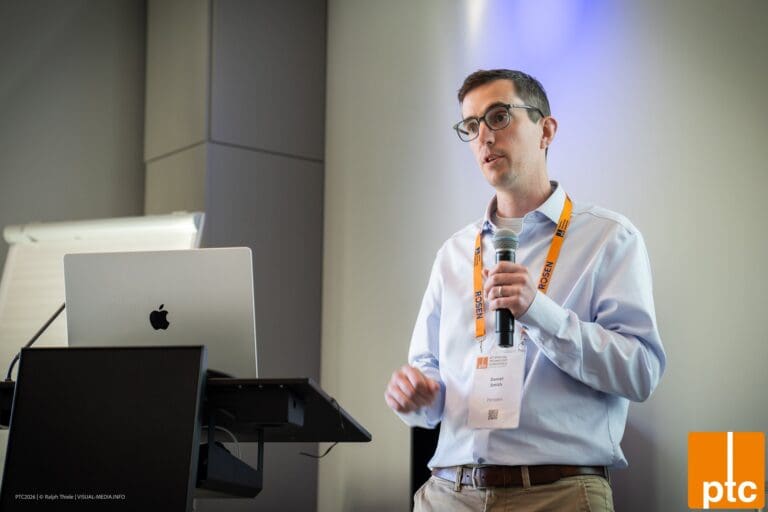
Subject Matter Expert Evaluation of Pipeline Integrity Trained, Agentic Artificial Intelligence Based Technical Advisory System
As artificial intelligence tools, particularly large language models (LLMs), continue to evolve, their potential for supporting technically complex domains such as pipeline integrity management is...

Artificial Intelligence in Pipeline Integrity: What the Evidence Actually Says
Where can AI be trusted in pipeline integrity management? In the August issue of World Pipelines, Penspen digital experts explore the evidence from Penspen’s evaluation of Aura, an AI-based...

From Chokepoints to Corridors: Why Energy Security Now Depends on Infrastructure Resilience
In the 31st issue of Dar Magazine, Nigel Curson, EVP of Technical Excellence, explores why resilient infrastructure will play a defining role in Africa's long-term energy security and economic...

Industry Report – Capability Gap Analysis for Newbuild Offshore CO2 Pipeline Transportation Systems
Penspen's new report, commissioned by the North Sea Transition Authority, examines the challenges posed by transporting carbon dioxide through newbuild offshore pipelines, and addresses the steps...

Sidara Annual Report 2026
Penspen has been a proud member of Sidara (formerly Dar Group) since 1990. Sidara is a global collaborative of leading specialist firms that design for people and the planet. In 2025, Sidara...

New Technical Report Explores the Future of CO₂ Transport for UK CCS
Penspen has today (Thursday, July 30) published a report commissioned by the North Sea Transition Authority (NSTA) into the challenges posed by transporting carbon dioxide through offshore pipelines....
Penspen Latin America Director Appointed to AMPP Global Technical Advisory Committee
International engineering consultancy Penspen is pleased to announce that Gustavo Romero, Director – Operations (LATAM), has been appointed to the Global Technical Advisory Committee (GTAC) of the...
More insights
-
Subject Matter Expert Evaluation of Pipeline Integrity Trained, Agentic Artificial Intelligence Based Technical Advisory System
As artificial intelligence tools, particularly large language models (LLMs), continue to evolve, their potential for supporting technically complex domains such as pipeline integrity management is rapidly gaining attention.…
Read insight -

Artificial Intelligence in Pipeline Integrity: What the Evidence Actually Says
Where can AI be trusted in pipeline integrity management? In the August issue of World Pipelines, Penspen digital experts explore the evidence from Penspen’s evaluation of Aura, an…
Read insight